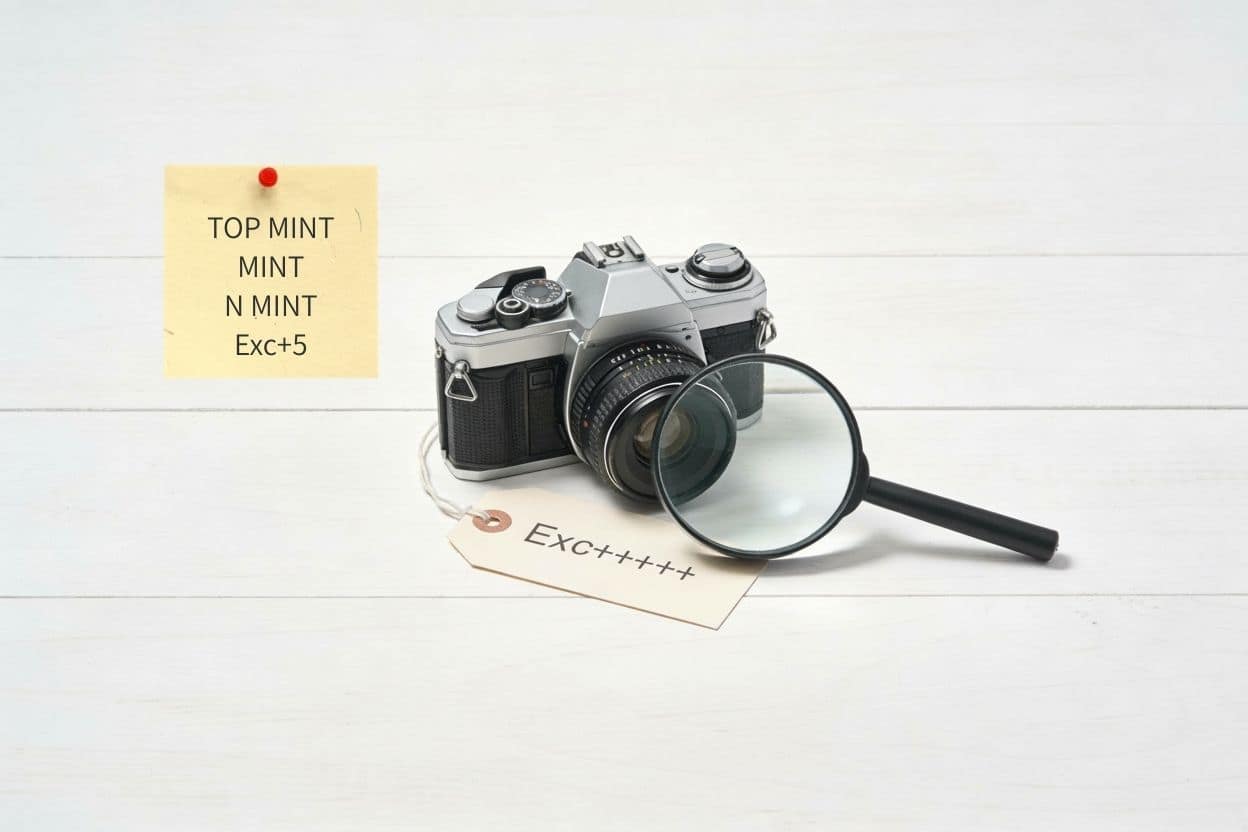
Why Japanese eBay “Mint/Exc/+++++” Can Be Confusing (and How This Guide Helps)
If you’re shopping for a film camera on eBay and browsing listings from Japan, you’ve probably noticed titles packed with phrases like “TOP MINT,” “Near Mint,” “Excellent +++++,” or mysterious shortcuts like “N MINT” and “+5.” At first glance, these grades look helpful—maybe even official—but the reality is more complicated. These terms are not standardized eBay condition codes; they’re seller expressions that vary by shop, and the same word can mean slightly different things depending on who’s listing. For beginners especially, this can feel overwhelming: Does “TOP MINT” guarantee the camera works perfectly? Is “Excellent +++++” better than “Near Mint”? And why do Japanese sellers write so much about tiny dust or slight scratches?
The core confusion: appearance vs. function
The biggest source of confusion is that grades like “Mint” or “Excellent” often describe overall condition—a blend of how the camera looks and whether it works—but sellers don’t always break down those two aspects separately. A camera might be cosmetically pristine (TOP MINT appearance) yet still need light‑seal replacement or have a slightly sticky slow shutter speed that wasn’t mentioned. Conversely, a camera marked “Excellent” might show normal wear on the outside but function flawlessly inside. Without knowing what each seller emphasizes, it’s easy to either overpay for a cosmetic beauty with hidden maintenance needs, or skip a great shooter because the listing scared you off with honest‑but‑minor flaw notes.
Why this guide exists
This article will help you decode Japanese camera grades so you can shop with confidence, not anxiety. You’ll learn:
- What common grades actually signal (and what their abbreviations mean): BRAND NEW, TOP MINT, Near Mint / N MINT, Excellent / Exc / +++++, and AS‑IS
- How to separate cosmetic, functional, and optical condition using a simple “three‑box” approach
- Which lens and viewfinder notes matter for image quality—and which are just routine disclosures that look scarier than they are
- Why Japanese sellers often grade conservatively—and how to use that tendency to your advantage without assuming every listing undersells itself
By the end, you’ll be able to look at a Japanese eBay listing, quickly assess the real condition from photos and the Condition Description, and make a smarter buying decision—whether you’re hunting for your first Canon AE‑1 Program, a Nikon FM, or any other 35mm SLR.
Japanese Camera Grades, Explained (Mint, Exc, +++++, and Shortcuts)
When you browse eBay listings from Japan, you’ll often see terms like “BRAND NEW,” “TOP MINT,” “Near Mint,” “Excellent,” and strings of plus signs (+++++) in the title. These are not official eBay condition grades—they’re seller expressions, and the exact meaning can vary by shop. Some sellers abbreviate to save space: “Near Mint” becomes N MINT, “Excellent” becomes Exc, and “+++++” sometimes appears as +5. The safest way to use these grades is to treat them as a quick “overall level,” then confirm the important parts with photos and the Condition Description.
The Three‑Box Rule: Looks, Works, Optics
Even when a listing says the camera is working, it helps beginners to separate what you’re evaluating:
- Looks (cosmetic): paint wear, dents, scratches
- Works (function): shutter, film advance, light meter, battery compartment
- Optics (clarity): fungus, haze, dust, separation, scratches
In practice, many Japanese sellers grade based on a combination of appearance and basic functionality, and they often do a reasonable “full basic check” before listing. Still, cosmetic condition and functional condition don’t always match perfectly—so using this three‑box mindset prevents disappointment.
Common Grades (Best to Well‑Used)
BRAND NEW / UNUSED
The camera has never been used—often old shop stock. Cosmetically it should be immaculate, but “unused” does not automatically mean “freshly serviced.” Light seals can age even in storage, and lubricants can thicken over decades, so routine maintenance may still be needed.
TOP MINT / MINT (collector‑pleasing level, most of the time)
In most cases, this means the camera looks extremely clean—minimal handling marks and very little wear. For many buyers, this is the “collector‑satisfying” level: something you’ll enjoy owning and displaying, not just using. Many Japanese sellers also confirm basic operation before using this grade, but it’s still an overall label rather than a standardized checklist—so age‑related items (like light seals) may need attention later even if the camera looks perfect.
Near Mint / N MINT (clean practical user, high satisfaction)
“Near Mint” (or N MINT) usually indicates very light cosmetic wear—tiny paint chips, slight brassing, or faint marks on the base plate. For most beginners, this is often the sweet spot: a practical, everyday camera that still feels “nice” in hand and tends to be a high‑satisfaction purchase. It often implies the camera is working in normal use, but it’s best read as “clean overall” rather than “every detail is perfect,” especially for long‑stored bodies.
Excellent / Exc / Exc+ and +++++ / +5 (solid used gear—often cleaner than you expect)
“Excellent” (or Exc) means normal signs of use—corner wear, light scuffs, and general handling marks. In Japanese listings, “Excellent +++++” (or Exc +5) often describes a camera that’s simply a good, usable used item: not a collector piece, but absolutely fine for shooting. Because many Japanese sellers grade strictly, an “Excellent +5” from Japan can sometimes show less wear than overseas buyers expect from the word “Excellent.” Treat plus signs (+++++ or +5) as a “better than average” hint, while remembering the system isn’t standardized.
AS‑IS / For Parts
AS‑IS means the seller is not guaranteeing condition (often because there is a known issue or it wasn’t fully confirmed). For Parts means non‑working or incomplete. For beginners, these are best avoided unless you specifically want a repair project and the risk is priced in.
Why the Title Grade Isn’t Enough
The most reliable clues are the photos and the Condition Description field, because that’s where sellers note specific flaws such as haze, fungus, battery-compartment issues, or missing parts. Even when Japanese grading is generally strict, small mismatches can happen—like a very clean-looking body with age-related seals, or a well-used body that functions perfectly. Using grades as a quick filter, then relying on photos and the description for final judgment, is the most beginner-friendly approach.
Lens & Viewfinder Notes: What Affects Images (and What Usually Doesn’t)
Lens descriptions on eBay can sound alarming, especially in Japanese listings where sellers often disclose even tiny imperfections. The goal isn’t to find a “perfect” vintage lens—it’s to understand which notes are likely to matter in real photos, and which are often just normal signs of age on used gear. A practical approach is to judge degree (mild vs. heavy) and match it to your shooting style (backlight, night scenes, wide‑open apertures).
What often looks worse than it is
- Tiny dust inside the lens: A few specks of dust are extremely common in used lenses and usually don’t affect photos. It becomes more relevant when dust is heavy/clumpy or combined with haze, fungus, or separation.
- Dust in the viewfinder: Viewfinder dust is often on the focusing screen or prism area. It can be annoying, but it typically does not appear in photos because it isn’t on the film plane.
Calm, beginner-friendly decision rules
- Japanese sellers often describe condition in detail, so the text can look worse than the real-world results—especially for minor issues. Used film lenses with some fungus, haze, or early separation are not uncommon, so don’t panic when you see those words; focus on how serious it seems.
- For fungus / haze / separation, the most important clue is severity: if it’s described as “heavy,” “noticeable,” or photos show the glass looking cloudy overall, you’re more likely to see reduced contrast and more flare—especially in backlit scenes. If it’s described as slight/mild and the glass still looks clear, it often won’t affect typical daylight photos.
- Your shooting style changes the risk: if you mainly shoot in bright daylight and stop down, minor imperfections are less likely to matter; if you love backlit scenes, night lights, or shooting wide open, you’ll notice haze/fungus more easily and should be stricter.
- In the end, prioritize clear close-up photos of the front and rear elements. If something concerns you, use the photos and the Condition Description to judge the severity before deciding.
Why Japanese Sellers Often Grade Strictly: Background and Expectations (Without Over‑Hyping)
If you’ve compared eBay listings from different countries, you may have noticed that Japanese sellers often describe condition more conservatively. A camera marked “Excellent” from Japan might look cleaner than an “Excellent” from elsewhere, or a lens noted as having “tiny dust” might seem nearly flawless in photos. This tendency isn’t universal—every seller is different—but there are a few cultural and business reasons why Japanese grading often leans stricter, and understanding them helps you calibrate your expectations without assuming every listing is underselling itself.
Cultural expectations around used goods
In Japan’s domestic used‑camera market, buyers tend to scrutinize cosmetic condition closely, and sellers respond by disclosing even minor flaws to avoid post‑sale complaints. Words like “tiny scratch,” “light brassing,” or “slight dust” are common because omitting them—even when they’re insignificant—can feel risky for the seller’s reputation. This habit carries over to international listings, where overseas buyers might not expect that level of detail for normal wear.
Avoiding disputes and setting realistic expectations
International shipping and eBay’s buyer‑protection policies mean sellers want to be conservative in their descriptions. If a seller says “Near Mint” and the buyer receives a camera with even a small cosmetic flaw the description didn’t mention, a return dispute can be costly and time‑consuming. By grading strictly and noting flaws up front, sellers reduce the chance of “item not as described” claims—even if it makes the listing sound worse than the camera really is.
The flip side: not every seller grades the same way
While many Japanese sellers are detail‑oriented and conservative, grading systems still vary by shop. Some use “TOP MINT” liberally; others reserve it for genuinely pristine items. The safest approach is to treat the grade as a rough filter, then rely on photos and the Condition Description to judge the actual state. Don’t assume a Japanese “Excellent” is always better than a non‑Japanese “Near Mint”—individual seller standards matter more than country of origin.
What this means for you as a buyer
- Japanese listings often include more cosmetic detail than you might be used to, so don’t be discouraged by mentions of “tiny” or “slight” issues—they’re often routine disclosure.
- Strict grading can work in your favor: if you’re comfortable with normal used‑camera wear, you may find good value in “Excellent” or “Exc+” listings that are priced below “Mint” but still very clean.
- Always cross‑check the description with photos. If the text says “heavy wear” but photos show only light corner scuffs, trust the photos—and if the text feels vague, ask for clarification before bidding.